

Indented Acne Scars: Why They Form and How Dermatologists Treat Them
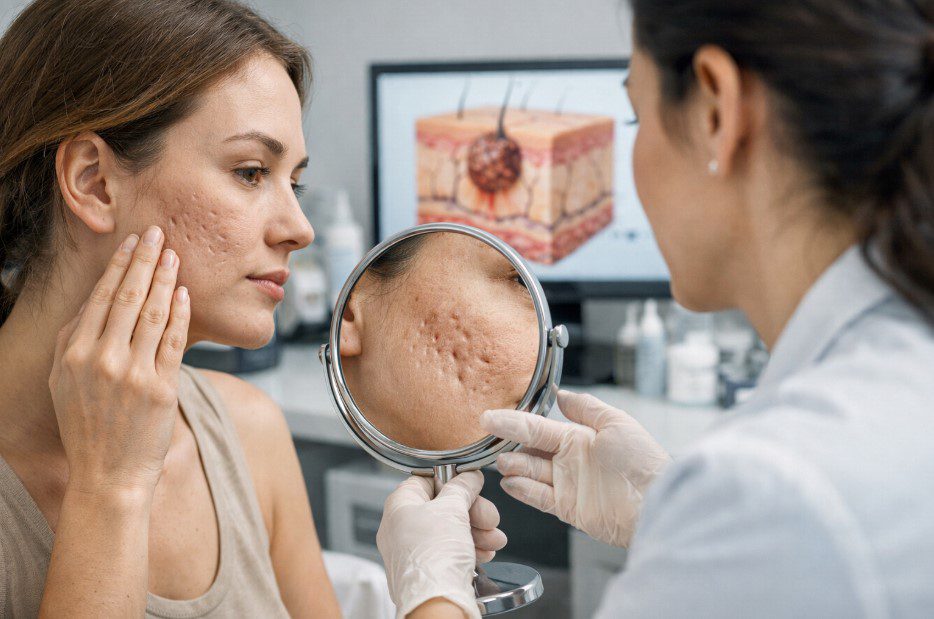
It can feel discouraging when acne finally settles, but indented acne scars still leave the skin looking uneven and harder to ignore.
These scars are small dips or hollow areas that form after deeper acne damages the skin. As the area heals, the skin does not make enough collagen, so it does not fill back in evenly.
In this article, you will learn why indented acne scars develop, what happens below the skin, and how dermatologists assess which treatments may be suitable.
To start, it helps to understand what is happening beneath the surface and why these scars look the way they do.
How Severe Acne Damages Skin Structure
Severe acne can affect more than what you see on the surface. When a breakout gets deep, swollen, and painful, it can damage the skin underneath. That is often where indented scars begin.
Instead of healing back to normal, the skin may repair unevenly. This usually happens when the area does not produce enough collagen during healing. Collagen is what helps give skin structure and support. When there is not enough of it, the damaged area may heal with a dip instead of smoothing out.
This is more common with deeper spots like nodules and cysts. These breakouts tend to cause more disruption under the skin, and the effects can stay long after the acne has gone. At first, the damage may not seem obvious. Later, it can show up as dents, rough texture, or shadows that make the skin look uneven.
A few things are usually happening under the skin:
- Inflammation breaks down healthy tissue, especially in deeper and longer-lasting breakouts.
- Too little collagen is made during healing, so the skin does not rebuild evenly.
- The surface loses support underneath, which can leave shallow or deeper depressions behind.
That is why severe acne is not always just a temporary skin issue. Even when the breakout has cleared, the skin may still show changes that take much longer to improve.
Dermatological Treatments for Indented Acne Scars
Indented acne scars often need more than surface-level care, because the skin may have lost support underneath or healed in a way that leaves visible dips behind. In some cases, people may explore dermatologist-led care or plastic surgery options to better understand which treatment may be suitable.
With that in mind, here are the 5 treatments doctors often turn to.
1. Subcision
Subcision is often used when an indented acne scar looks like it is being pulled inward. Instead of working only on the surface, this treatment targets the tissue under the scar.
A doctor uses a small needle to loosen those tight bands, which can help the skin lift and sit more evenly. That is why subcision for acne scars is often considered when the scar looks tethered, not just uneven.
2. Microneedling
Not every indented acne scar needs a treatment that goes under the skin to release it. Sometimes, the bigger issue is that the skin looks uneven, worn, or rough. In those cases, microneedling may be used to help the skin repair itself.
Tiny needles create controlled micro-injuries, which encourage new collagen to form. As that happens, the scarred area can slowly look smoother and less obvious over time.
3. Fractional Laser Resurfacing
For some indented acne scars, the problem is not just the dip itself but the rough texture around it. Fractional laser resurfacing is used to refresh the skin by creating tiny controlled injuries that trigger healing.
As the skin repairs itself, it starts making more collagen. Over time, this can help soften the scarred area and make the surface look smoother and more even.
4. Dermal Fillers
Some indented acne scars respond well when the depressed area is gently lifted from underneath. That is where dermal fillers may come in. A doctor places the filler beneath the scar to add support and make the skin look more even.
The result is usually not permanent, but it can soften the shadowing and help the scar blend in better with the surrounding skin.
5. Chemical Peels
Chemical peels are sometimes used when indented acne scars come with rough texture or uneven skin tone. A doctor applies a solution that helps remove damaged outer skin and encourage new skin to come through.
This will not release deep tethering under a scar, but it can help the skin look smoother overall. For some people, it works best as part of a wider treatment plan rather than on its own.
How Doctors Evaluate Acne Scar Treatment Options
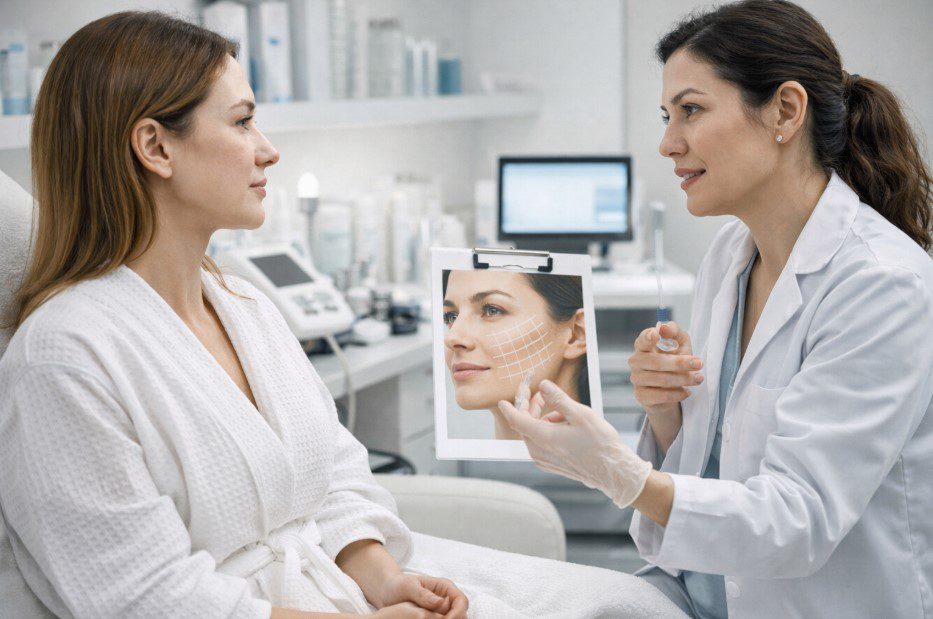
Choosing treatment for indented acne scars is not always easy. Two people can come in with scars that look very similar, but the best treatment for each of them can still be different. That is because a doctor is not only looking at the top layer of the skin.
A good assessment also looks at what is happening underneath, how the skin has healed, and what kind of change is actually possible.
In most cases, the aim is to match the treatment to the scar. It is not about giving every patient the same procedure and hoping for the best. Some scars improve more when the tight bands under the skin are released.
Others need help with collagen support, skin texture, or both. This is why treatment plans are often tailored to the person, not copied from a standard template.
Conclusion
Indented acne scars can be difficult to move on from because they often remain visible even after active acne has cleared.
As we have covered, these scars can form through collagen loss, structural damage, and fibrous tissue beneath the surface.
Some people may benefit from one procedure, while others may need a combination approach to improve both texture and depth.
The most important thing is choosing a treatment plan that fits the scar, the skin, and the person, rather than expecting one solution to fix everything.











Leave a Reply
You must be logged in to post a comment.