

When 40,000 Iowans Show Up and the Wi-Fi Has to Work
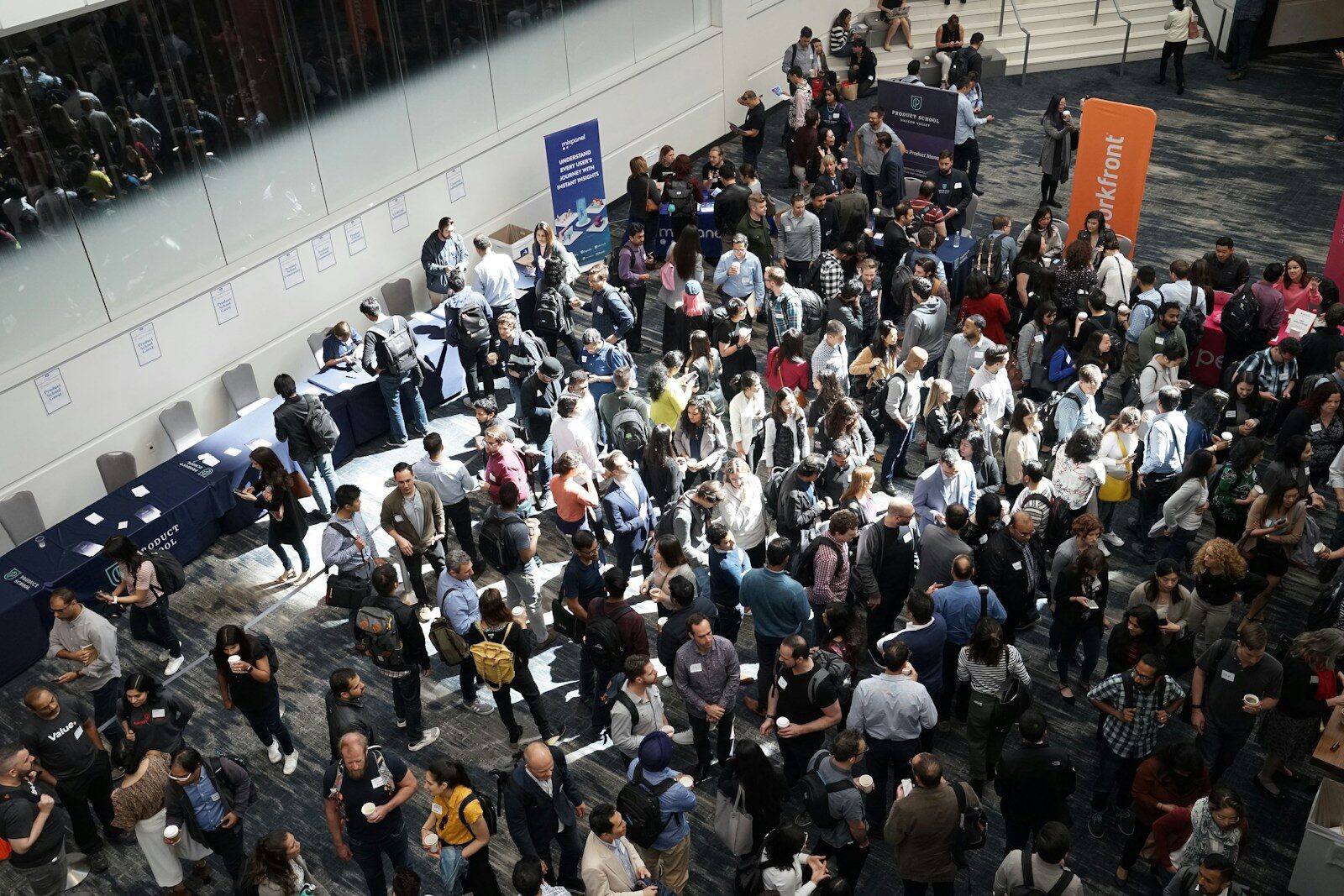
Photo by Product School on UnSplash
Last August, a vendor at the Iowa State Fairgrounds in Des Moines watched a queue of customers stretch twenty deep past her booth — not because she’d run out of product, but because her payment terminal had lost its connection. She’d done everything right: brought her own hotspot, confirmed her carrier’s coverage map showed strong signal. What the map didn’t show was two hundred thousand phones all hitting the same towers at once across 445 acres of open fairground.
That moment — a single dead payment reader stalling a line of paying customers — has become a familiar story at large events across Iowa. From the Iowa State Fair to ag expos sprawled across flat eastern Iowa farmland, from Davenport’s riverfront festivals to sold-out football weekends at Hilton Coliseum in Ames and Carver-Hawkeye Arena in Iowa City, the problem repeats itself. Cell networks weren’t built for sudden, dense crowds. And the moment an event gets big enough to matter, standard internet options start failing.
The Infrastructure Gap Nobody Talks About
Iowa’s event venues run the full spectrum. Wells Fargo Arena and the Iowa Events Center in Des Moines are purpose-built facilities with permanent infrastructure. But a significant share of the state’s biggest events happen outdoors — county fairgrounds, farm show parcels, open lots along the Mississippi in the Quad Cities — where there’s no permanent network backbone to speak of. Organizers who assume they can rely on the local carrier signal are often right until the gates open.
Davenport event producers know this well. A riverside festival or riverfront market weekend can draw tens of thousands of visitors to an area with solid everyday coverage, and still see LTE congestion bad enough to slow credit card processing to a crawl. The issue isn’t signal strength — it’s capacity. There’s simply no way for a single carrier’s local infrastructure to absorb a sudden spike of ten or fifteen thousand simultaneous device connections in a footprint that normally sees a fraction of that load.
Ag shows and farm equipment expos face an even starker version of this problem. These events often happen in rural areas — open fields between small towns, fairgrounds built decades before wireless internet existed — where the nearest cell tower might serve a few hundred residents on a quiet Tuesday. Bring in ten thousand farmers, dealers, and buyers, and the network collapses under the load before the first demonstration tractor fires up.
Bonded Connections and Why They Hold
The fix, for events that can’t afford connectivity failure, is a different architecture entirely. Rather than depending on any single carrier or single type of connection, dedicated event internet providers build temporary networks that bond multiple uplinks simultaneously — pulling bandwidth from multiple cellular carriers at once, layering in satellite where ground-based signals are weak, and adding 5G where coverage exists. The result is a connection that doesn’t collapse when one carrier’s tower gets overwhelmed, because the load is already distributed across several independent paths.
On top of that, WAN smoothing and uplink prioritization mean that when one connection degrades, the network doesn’t stutter — traffic shifts automatically, and the event’s most critical systems (payment processors, check-in kiosks, ticketing) stay up even when the general attendee Wi-Fi is under heavy load.
It’s a more involved setup than plugging in a consumer router, which is why events that take it seriously tend to bring in specialists rather than improvise.
“People assume that if their phone shows four bars, the Wi-Fi will be fine. But four bars just means you can hear the tower — it doesn’t mean a thousand other people aren’t already using every bit of capacity it has. We’ve deployed at outdoor ag expos where there was literally zero wired infrastructure within a quarter mile. You’re building the network from scratch, on a deadline, and it has to handle everything from point-of-sale terminals to live video feeds the moment the gates open.”
— Matt Cicek, founder of Iowa event WiFi provider WiFiT
Since 2015, WiFiT’s on-site engineers have deployed temporary internet for hundreds of indoor and outdoor events across the country, including a growing number of Iowa venues. The operational model centers on having actual technicians present at the event — not a remote support line — because the variables on the ground shift fast. Weather degrades satellite uplinks. Device counts spike unpredictably when a keynote ends and everyone grabs their phone. A loading dock door left open can kill a wireless bridge. These aren’t problems that get solved over a chat window.
What Iowa Event Organizers Are Dealing With
Across the state, the venues are varied enough that no single connectivity solution fits every situation. A hockey game at Wells Fargo Arena has different demands than a seed corn expo in central Iowa. A Davenport riverfront event has different physical constraints than a graduation weekend at Carver-Hawkeye Arena in Iowa City, where cell towers are already stressed by game-day traffic from Kinnick Stadium next door.
What they share is the same core exposure: if the internet goes down during peak hours, the damage isn’t just technical. It’s financial, reputational, and immediate.
“We had a trade and consumer show where the venue’s existing network just wasn’t scoped for our exhibitor load. We had probably three hundred vendors trying to run card readers simultaneously during the peak lunch window, and the network couldn’t handle it. After that, we started specifying dedicated event internet as a non-negotiable line item in our planning budget — same as generators or security staffing. You can’t fix a payment failure after it’s already cost someone their sales rush.”
— Dana Hofstetter, trade show floor manager, Iowa Events Center
That shift in thinking — from treating connectivity as an afterthought to treating it as a core operational requirement — is something more Iowa event organizers are making. Partly it’s driven by hard experience. Partly it’s the growing density of connected devices: attendees who once carried a single phone now carry phones, tablets, and wearables, and exhibitors run card readers, digital signage, inventory apps, and sometimes live-streamed demos all at once.
The Big Ten Football Factor
College football weekends are their own category. Iowa Hawkeyes home games at Kinnick Stadium and Iowa State Cyclones games at Hilton Coliseum in Ames both bring sixty-to-seventy thousand people into concentrated areas, and the surrounding neighborhoods — restaurants, tailgate lots, satellite events — all experience the same congestion spike. Bars running live promotions, parking operations relying on mobile apps, nearby venues hosting pre- or post-game events: they’re all drawing on networks that are already pushed past design capacity.
Temporary internet infrastructure that can be staged around the periphery of these events — in parking areas, hospitality tents, sponsor villages — has become a more common ask from organizers who want to capture the commercial opportunity that comes with that crowd.
Where Iowa Goes From Here
Event organizers across eastern Iowa and the Quad Cities are increasingly treating reliable temporary internet the way they treat power or portable sanitation: as something that gets budgeted in advance, not scrambled for when something breaks. The shift is partly about protecting revenue and partly about attendee expectations — people in 2026 assume they’ll be able to tap their phone to pay for a corn dog, and they’re not wrong to expect it.
As Iowa’s event calendar continues to grow — from the fairgrounds in Des Moines to the riverfront in Davenport, from Ames on game day to Iowa City on graduation weekend — the providers who can deliver consistent, field-proven event internet are increasingly positioned as essential partners, not optional vendors. The question for organizers planning their next big event isn’t whether they need reliable connectivity. It’s whether they’ve made it a line item yet.








Leave a Reply
You must be logged in to post a comment.