

Why Planned Water Capacity Often Fails to Match Real Growth
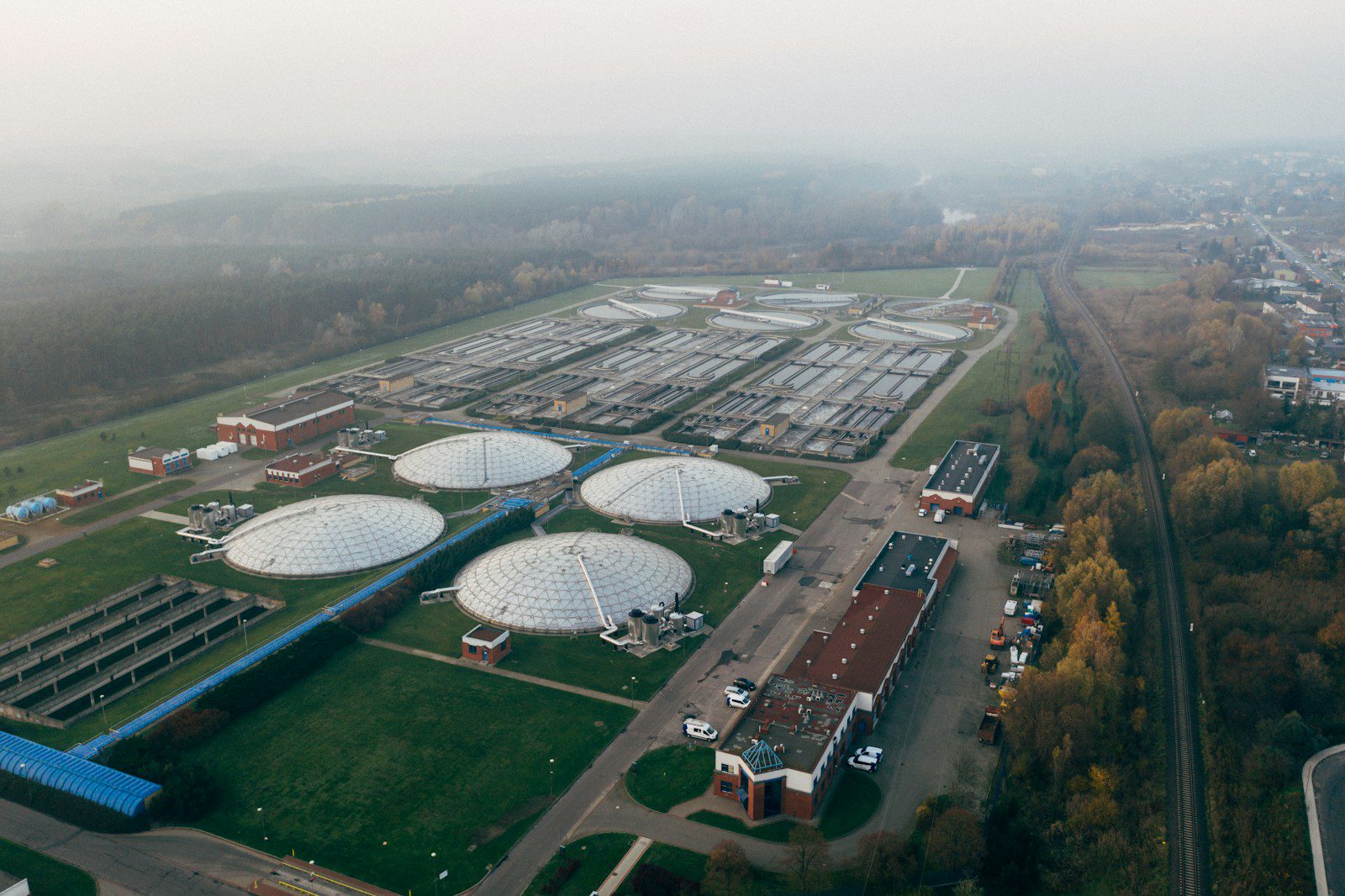
Photo by Marcin Jozwiak on UnSplash
In states like Iowa, a mix of uneven growth and infrastructure uncertainty can lead to costly mismatches.
In places like Iowa, planners and utilities are often left asking the same questions: How much water and wastewater capacity do we need to accommodate future change, and when do we need it? On paper, it seems simple: Use population projections and historical trends to forecast demand, then size infrastructure accordingly.
While these growth forecasts tend to follow a smooth curve, in real life this is rarely the case. Because growth typically occurs in fits and starts, population projections often overshoot or undershoot their targets, resulting in overbuilt or under-resourced systems that are out of sync with real demand.
When Forecasts Miss the Mark
To understand why planned treatment capacity so often misses the mark, it helps to look at how infrastructure forecasts are developed and where the assumptions behind them diverge from the realities of growth.
Water and wastewater capacity planning typically starts with projecting population and economic growth. Planners look at past trends and future expectations to estimate population increases, employment growth, and new development as the basis for infrastructure sizing, including treatment plant capacity, distribution networks, pipe sizing, lift station design, and related infrastructure.
But forecasts are wrong more often than we’d like to admit. Growth doesn’t occur in smooth, predictable waves. When planners extrapolate past population growth surges into the future, projections can overestimate actual demand if growth suddenly slows. They may also underestimate it during localized growth spurts that trigger sharp demand spikes. Both scenarios result in infrastructure that doesn’t align with reality.
In Iowa, population trends vary widely from one community to the next. The Des Moines metro and suburbs such as Waukee and Ankeny have grown noticeably in recent years, while many rural counties have seen population decline over the past decade. Regional growth pressures in central and eastern Iowa can outpace the conservative timelines built into long-range capital plans for water infrastructure, leaving utilities racing to expand systems that were never designed to meet such changes.
The Risks of Overbuilding and Under-Capacity
Planners face a difficult trade-off: They need to build enough capacity to handle future growth, but not so much that communities end up paying for infrastructure they don’t yet need. Finding that balance isn’t easy.
When planners size systems based on optimistic growth forecasts, these oversized plants and pipes may offer a safety net for meeting future demand increases, but they come at a price. Large treatment plants and oversized systems carry fixed operational and maintenance costs that communities must pay even when they are not being fully utilized. Communities may have to start paying off the debt on oversized facilities long before they actually need the extra capacity. For smaller or slowly growing utilities — particularly in rural Iowa, where population decline is common — this can strain budgets and leave little room for other priorities.
On the other end of the scale, when systems aren’t big enough to handle real demand as it materializes, it can leave developers waiting for connections, force development moratoriums, and cause service disruptions or water-quality issues. Alleviating these growth pains often requires emergency upgrades, temporary fixes, or fast-tracked construction, which typically cost far more than phased, strategically timed expansions.
Both scenarios carry financial, operational, and political risk. Overbuilding burdens ratepayers and limits future flexibility. Under-capacity erodes trust with developers and residents, and can stall economic growth.
Why Flexible, Phased Infrastructure Makes Sense
The recognition that forecasts rarely match reality has led many planners and utilities to rethink how they size and time infrastructure investments. Rather than building everything at once based on long-term growth projections, phased infrastructure allows capacity to expand in line with actual demand as it materializes.
What can help utilities and developers align water investment with what’s actually happening on the ground? Options include modular or decentralized treatment systems, scalable plants designed for expansion, and clearly defined trigger points for adding capacity.
This approach reduces long-term cost exposure in several ways:
- It aligns investment with real demand: Phased systems allow infrastructure to be built in stages that match actual development patterns, eliminating the financial burden of overpaying for capacity that sits unused for years.
- It allows rapid deployment: Modular and packaged systems can often be deployed faster than traditional centralized treatment expansions. Instead of waiting several years for centralized infrastructure to catch up, communities can add capacity quickly and cost-effectively.
- It’s better for financial planning: Building in phases spreads costs over time, instead of requiring a large, upfront investment. This gives communities room to adjust budgets as demand unfolds, reducing pressure on bonds, rate increases, and long-term capital plans.
Flexibility doesn’t remove the need for planning. It lets communities plan smarter by acknowledging uncertainty and designing infrastructure that can expand and adapt as change unfolds. When communities build systems that can be scaled or reconfigured, they can adjust course without taking on unnecessary costs or compromising service reliability.
What This Means for Planners and Developers
In Iowa, where population growth is stronger in some regions and flat or declining in others, the key takeaway is simple: Predicting growth is less important than planning for change. Population projections are tools, not truths cast in stone, and should be used to inform flexible strategies rather than dictate fixed infrastructure designs.
Growth is good, but when infrastructure lags or overshoots, everyone pays the price. Embracing adaptive, phased approaches helps ensure that water systems are resilient, responsive, and aligned with real community needs rather than computer-generated forecasts that may not materialize.










Leave a Reply
You must be logged in to post a comment.