

Key Strategies for Organizing Office Storage Without Wasting Any Space
An organized office shapes daily habits, supports smoother routines, and brings clarity to shared environments. Storage choices guide how people move through their tasks, how long they spend searching for items, and how confidently they maintain tidy surroundings. Many workspaces struggle with clutter simply because every item has no clear destination. With a thoughtful plan and a focus on practical systems, any office can use its footprint far more effectively. The following ideas explore methods that turn underused nooks into productive zones, simplify retrieval, and protect valuable items without letting space go to waste.

Photo by Paula on on Pexels
Smart Solutions that Shape Daily Flow
One of the strongest steps toward an efficient layout comes from rethinking how equipment, deliveries, and personal belongings are handled. This is where modern systems stand out, and a clear example appears when many offices adopt digital storage hubs. These units rely on controlled access, real-time updates, and compact construction to streamline activity. A well-designed setup keeps items secure without demanding extra room. Offices that introduce these hubs often notice smoother pickup routines, shorter lines at reception, and fewer misplaced packages. A particularly helpful option appears with better office storage with smart lockers placed in central zones, giving teams a reliable anchor point that fits neatly into busy corridors. These systems allow items to be assigned, tracked, and collected with minimal interruption, all within a format that avoids clutter and frees cabinets for other priorities.
Using Vertical Zones with Purpose
Many offices overlook wall height and focus only on eye-level surfaces. Tall shelving, wall-mounted cabinets, and stackable modules can reclaim the upper half of a room without impacting movement at ground level. Before installing anything new, map the room from corner to corner and identify panels of unused wall. Slim shelving near printers or supply stations keeps items visible yet out of the way.
Storage that rises upward can transform previously forgotten space, easing pressure on drawers and floor cabinets. When weight distribution and access are planned carefully, vertical zones support a wide range of items such as binders, reference materials, cable boxes, labelers and lightweight tools. Taller structures create order by concentrating similar categories and clearing crowded desks.
Adapting Furniture for Dual Purposes
Office furniture often dictates how much storage remains available. Desks with integrated compartments, meeting tables with hidden bays, and seating that includes lift-up sections turn everyday items into quiet organizers. This approach reduces the need for standalone cabinets and keeps objects close to the spots where they are used most. Many companies introduce modular furniture, making it easier to rearrange layouts without losing storage capacity.
Drawers built into shared tables make stationery and accessories instantly reachable, while bench seating with interior compartments supports team zones without creating clutter. When multiple staff members share a workspace, built-in storage helps reduce conflicts over space and cuts down on lost items.
Creating Micro Zones that Streamline Movement
Large rooms often scatter supplies across wide distances. A more deliberate structure creates clusters of items linked to specific tasks. For example, a printing station works best with paper, cartridges, binding tools, and trimming equipment placed in a compact radius. A packaging corner benefits from tape, markers, shipping forms, and handheld scales grouped neatly together.
By forming micro zones, teams move decisively between tasks rather than wandering around the office searching for scattered tools. Smaller compartments, drawer inserts and clear containers support this method by keeping each micro zone consistent. Labels guide quick decisions and cut time spent searching for items. Once zones are defined, storage becomes more intuitive, and people can settle into productive habits.
Protecting High-Value Items with Controlled Access
Some items require tighter control due to sensitivity, cost, or frequency of use. Without proper systems, these objects are vulnerable to loss or damage. Offices can prevent these issues by designating protected sections within their storage plan. Lockable cabinets, coded compartments, and monitored access logs create a layer of order around high-impact supplies. Controlled access also helps maintain accurate inventory. When items are checked in and out through purposeful systems, stock levels become easier to track and replenishment stays on schedule. Clear rules about usage encourage accountability, which supports long-term organization across the workplace.
Maintaining a Storage Culture that Lasts
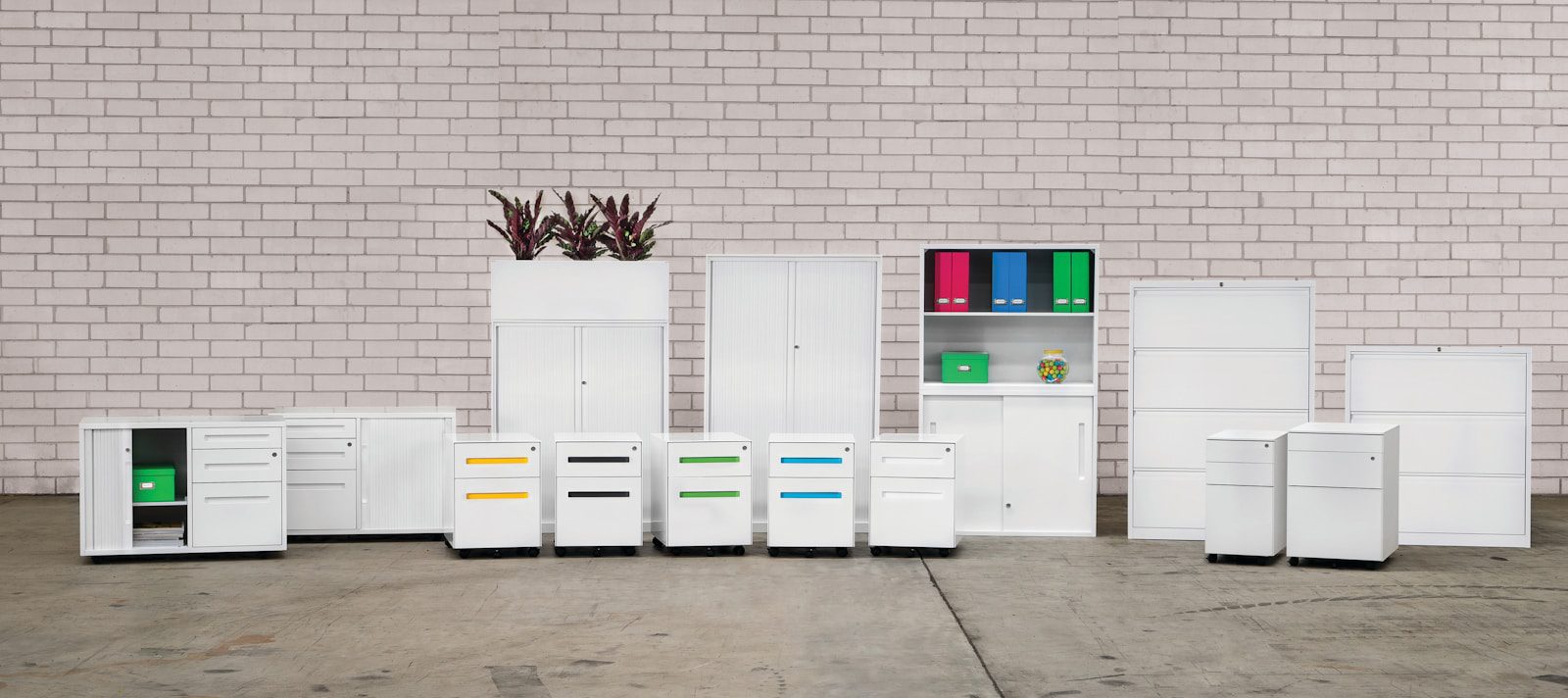
Photo by Jarred Manasse on Unsplash
Smart planning is only useful when daily practices support it. A long-lasting storage culture grows from consistent habits, clear expectations, and simple upkeep routines. Assign each drawer, shelf, and compartment a stable purpose, so items always return to the same space. Keep categories tight and avoid mixing unrelated tools or documents.
Regular reviews of supply levels prevent overflow and reveal rarely used items that can be relocated or removed. Encourage staff to tidy workstations at predictable moments during the week, reinforcing a shared commitment to organized surroundings. When storage routines become part of the office rhythm, clutter fades quickly and the environment feels calmer for everyone.
An office that uses storage thoughtfully feels more open, more productive, and easier to navigate. Through steady habits and clear intentions, any workspace can transform its storage plan and enjoy a smoother path through each day.











Leave a Reply
You must be logged in to post a comment.