

Casinos, Jobs, and Tax Dollars: What a New Illinois Bill Puts on the Line
Illinois is once again testing how far it is willing to go with casino expansion. This time, the question is not about adding more licenses, but about whether the state should let some of its weakest casinos move somewhere else entirely.
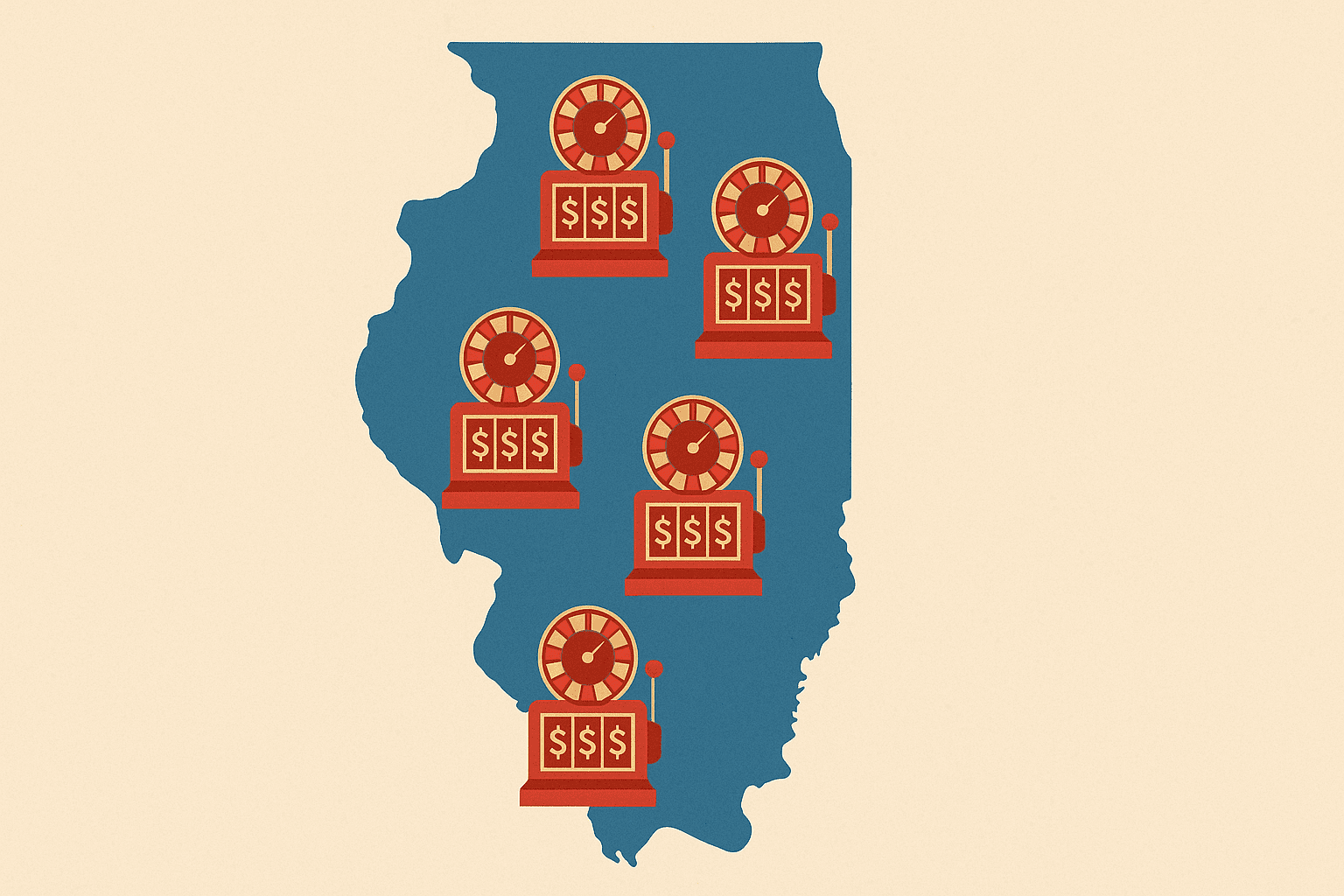
House Bill 4070, filed in late May by Republican Representative Joe Sosnowski, would create a formal path for up to three underperforming casinos to relocate within Illinois. The idea is to take properties that have struggled for years in quieter markets, give them a chance to reopen in stronger locations, and still keep tax money flowing to the towns that might lose a casino of their own.
New House Bill 4080 is Supposed to Work
On paper, the state’s gambling industry already looks crowded. Illinois has 17 casinos, nearly 9,000 licensed video gaming locations, and 14 legal sportsbooks tied to teams, tracks, and brick-and-mortar venues. Together, those sites support an estimated 30,000 jobs and generated around 1.7 billion dollars in gaming tax revenue for state and local governments in 2024, according to recent tallies that circulate among lawmakers and industry analysts.
Those headline numbers, however, hide the spread between the busiest casinos and the ones that sit half empty on weeknights. House Bill 4070 tells the Illinois Gaming Board to take a 12-month look at adjusted gross receipts for every casino in the state and rank them from top to bottom. The three licenses at the very bottom of that table would then be eligible to relocate, at the operator’s request, to another part of Illinois.
Eligibility is the keyword. The bill does not force anyone to move. It leaves the choice to the companies that hold those licenses, and to the executives and boards that would have to weigh construction costs, regulatory hurdles, and the risk of leaving a known market for one that looks promising on paper but has not yet seen a casino open its doors.
If a company decides the numbers make sense, the next step would not be a quiet deal between a single town and a single casino operator. Instead, House Bill 4070 sets up a competitive request for proposals process. Cities and counties that want the license would submit formal pitches to the Gaming Board, outlining possible sites, access roads, utilities, and projected economic impact. Any approved move would have to be completed within five years of a new host being selected, so projects could not sit on a shelf indefinitely.
The Economic Bet Behind Relocation
Sosnowski has described the legislation as a way of updating state rules for a market that does not look much like it did when the original riverboat era began. In his telling, some casinos ended up in locations that made sense in the 1990s but no longer reflect where people travel, where new housing has gone up, or where major roads now pull weekend traffic.
In interviews and public comments, the representative has argued that shifting a license from a stagnant site to a more dynamic corner of Illinois could dramatically change its impact. He has suggested that a relocated casino might realistically triple the number of jobs connected to that license, while lifting gaming tax receipts for the state and for the local governments that host it. Supporters also point to the 13 percent growth projected for casino-adjusted gross receipts in 2025, helped by new projects in Carterville and Chicago, as evidence that stronger locations are already starting to pull ahead.
Local officials in potential host communities have been quick to highlight what that would mean on the ground. In Freeport, for example, leaders have talked about a relocated casino as a possible anchor for hotel projects that have been discussed but never financed, as well as for restaurants, small venues, and the kinds of roadside developments that tend to follow a new gaming property. For towns that have watched casinos open elsewhere, a relocation model offers a shorter route into the industry than waiting for the legislature to approve brand-new licenses.
What happens to towns that lose a casino?
The same proposal that excites would-be host cities raises immediate questions for communities that already depend on a casino. In smaller municipalities, gaming tax receipts often underwrite core services, from policing and fire protection to road resurfacing and park maintenance. Losing a casino outright could leave a hole in the budget that would be difficult to fill with property or sales taxes alone.
House Bill 4070 tries to answer that concern with a compensation system built into the text of the bill. Under the proposal, the municipality or county that previously housed a casino would continue to receive its share of adjusted gross receipts even after the license moves to a new town, and that share would be doubled for a period spelled out in the legislation. Sosnowski has described that formula as a kind of bridge funding, designed to give local officials time to reset their plans and decide what to do with a property that no longer has slot machines or table games inside.
A Shifting Illinois Gambling Landscape
The relocation idea is surfacing at a moment when gambling in Illinois is moving in several directions at once. Traditional casinos now operate alongside thousands of video gaming terminals that sit in bars, gas stations, and truck stops. Legal sports betting, both at physical sportsbooks and on mobile apps, has layered a new kind of wagering on top of the old riverboat model that once defined the state’s casino scene.
Industry analysts say that the mix has created an unusual map. Some newer properties, linked to entertainment districts or big league sports venues, report strong volume. Others, particularly older sites on the edge of smaller towns, have seen their share of the market erode as players spread their spending across different forms of gambling. That uneven picture is central to the argument that the state needs a tool to move struggling casinos to places where customers already are.
Observers at BonusFinder, which tracks gambling regulation and commercial trends across North America, describe Illinois as one of the most complicated casino environments in the region, with legacy riverboat sites, newer land-based properties, dense video gaming networks, and a maturing sports betting sector all pulling in slightly different directions. In that context, a decision about where a single casino is allowed to operate can ripple outward, affecting nearby businesses, employment figures, and long-term tax planning for more than one community.
There is also a longer conversation running in the background about whether Illinois will eventually move toward full-scale online casino games. Some industry voices argue that questions about underperforming land-based properties, including whether they should stay locked to the towns where they opened, will influence how lawmakers and regulators think about any future digital expansion.
What Springfield Decides Next
For now, House Bill 4070 sits in the Illinois House Rules Committee, waiting for a formal hearing and a chance to move to a substantive committee. The measure was filed on May 29, and it will have to clear several procedural steps before lawmakers are asked to vote on whether to give the Gaming Board this new relocation tool.
If the proposal gains traction, Illinois would become one of the few states with a performance-based mechanism for moving existing casino licenses. Supporters say it could serve as a template for other jurisdictions where some long-running casinos no longer match the economic geography around them. Critics, particularly in communities that lean heavily on gaming tax receipts, are expected to drill into whether the promised safeguards and bridge payments are enough to justify letting long-established casinos leave.
Whatever happens to the bill, the debate has already surfaced a basic question for the state’s gambling policy: Should casino licenses be treated as fixed features of the towns where they were first approved, or as highly regulated assets that can be steered toward the parts of Illinois that promise the strongest returns in jobs and tax revenue over time?
The answer will help decide who wins and who worries if casinos are ever allowed to move.










Leave a Reply
You must be logged in to post a comment.